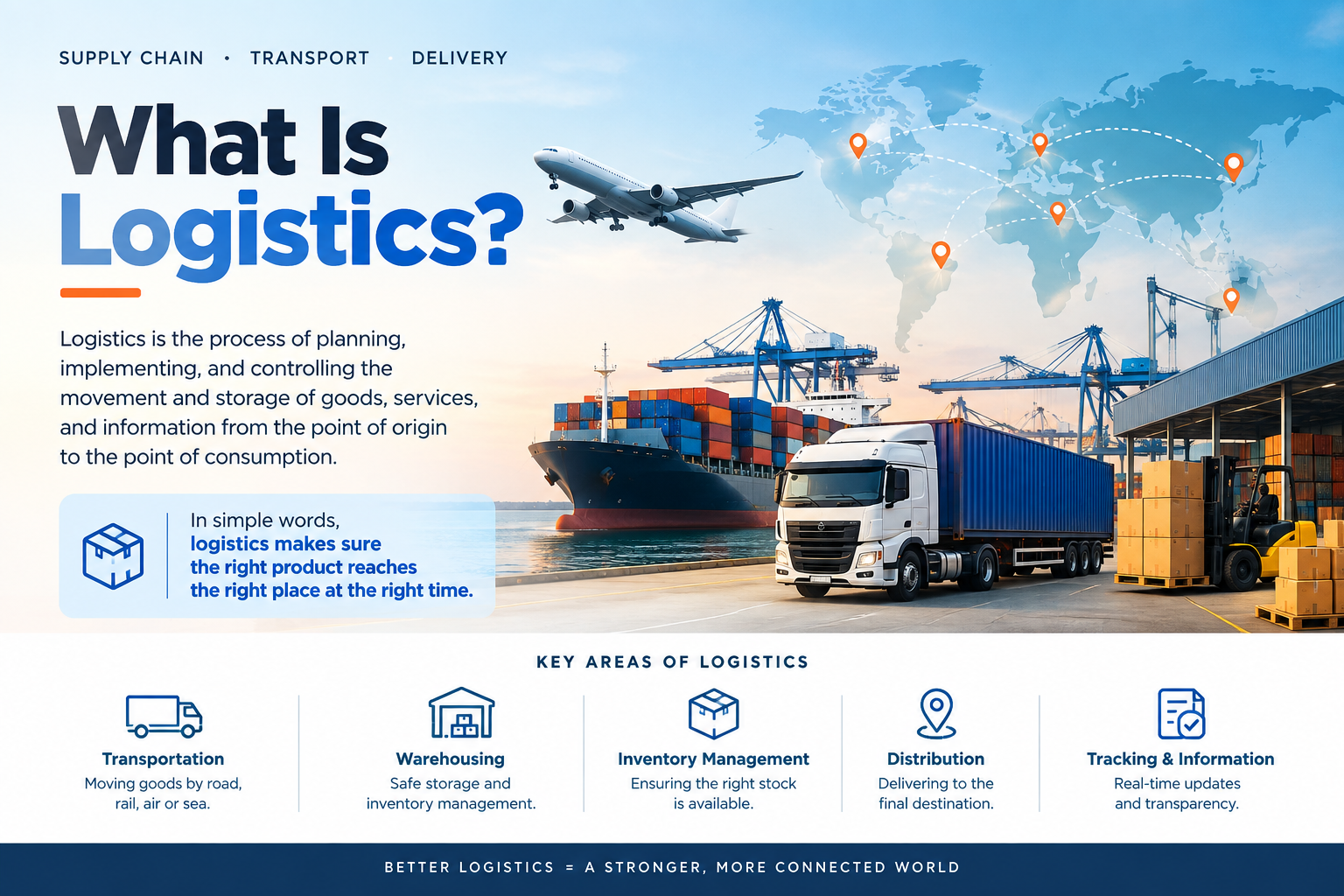
 What Is Logistics and How Does It Work in Trucking?
If you work in trucking, freight, or transportation, you probably hear the word “logistics” almost every day. But what is logistics, and what does it actually mean for truck drivers, owner-operators, carriers, and fleet owners?
In simple terms, logistics is the process of planning, moving, storing, and managing goods from one location to another. It includes much more than transportation. Logistics also covers scheduling, dispatching, warehousing, inventory coordination, communication, documentation, route planning, and final delivery.
For a trucking company, good logistics means getting the right freight to the right place at the right time while controlling costs and keeping operations organized.
What Is Logistics?
Logistics is the coordination of resources, information, transportation, and storage required to move goods efficiently.
Imagine a company needs to move a full truckload of packaged food from a distribution center in Texas to a warehouse in Georgia.

The truck itself is only one part of the operation.
Someone must:
-
Schedule the pickup.
-
Select the right truck and trailer.
-
Assign a qualified driver.
-
Plan the route.
-
Confirm the delivery appointment.
-
Monitor the shipment.
-
Communicate with the customer or broker.
-
Manage paperwork.
-
Handle delays if something goes wrong.
-
Confirm successful delivery.
All of these activities are part of logistics.
Transportation moves the freight. Logistics manages the entire process surrounding that movement.
Why Logistics Matters in Trucking
Trucking companies operate in an environment where small problems can quickly become expensive problems.
A late pickup may affect a delivery appointment. A poor route may increase fuel costs. A communication mistake may leave a driver waiting at a shipper. Poor planning may also result in unnecessary empty miles.
Effective logistics management helps trucking businesses keep operations organized.
It can support:
-
Better load planning
-
More efficient routes
-
Clearer communication
-
Fewer unnecessary delays
-
Better use of drivers and equipment
-
Improved customer service
-
Better control of operating costs
For owner-operators and small carriers, good logistics can be especially valuable because every truck, mile, and hour matters.
Main Parts of Logistics
Logistics involves several connected activities. Understanding these areas makes it easier to see how a trucking operation works as a complete system.
Transportation
Transportation is one of the biggest parts of logistics.
It involves moving freight between shippers, warehouses, distribution centers, retailers, manufacturers, and customers.
In trucking, transportation planning includes choosing suitable equipment, assigning drivers, selecting routes, scheduling pickups, and coordinating deliveries.
Warehousing
Freight does not always move directly from a manufacturer to its final customer.
Products may need to be stored in warehouses or distribution centers before continuing to another destination.
Warehousing logistics includes receiving goods, storing them safely, preparing orders, and organizing outbound shipments.
Inventory Management
Inventory management focuses on knowing what products are available, where they are stored, and when they need to move.
Poor inventory coordination can create transportation problems.
For example, a truck may arrive for a load that is not ready. That can cause detention, scheduling problems, and lost driving time.
Dispatching
Dispatching connects drivers, trucks, freight, brokers, and customers.
A dispatcher may help coordinate loads, communicate pickup and delivery instructions, monitor progress, and respond when problems happen.
Strong dispatch operations are important because drivers need accurate information before and during each trip.
Route Planning
The fastest-looking route is not always the best route for a commercial truck.
Logistics planning may consider traffic, truck restrictions, tolls, fuel locations, parking availability, weather, delivery windows, and driver availability.
Good route planning can make the entire trip easier to manage.
How Logistics Works in the Trucking Industry
A typical trucking logistics process starts before the truck begins moving.
Suppose a carrier accepts a load from Chicago, Illinois, to Atlanta, Georgia.
First, the carrier reviews the load details. This may include the freight type, weight, pickup time, delivery appointment, equipment requirements, and rate.
Next, the dispatcher or fleet manager selects an available driver and truck.
The driver receives important information such as:
-
Pickup address
-
Delivery address
-
Appointment numbers
-
Broker information
-
Load number
-
Special instructions
-
Required documents
Once the freight is loaded, the carrier monitors the shipment until delivery.
If there is heavy traffic, bad weather, a mechanical issue, or a delay at the shipper, the dispatcher may need to update the broker or customer and adjust the schedule.
After delivery, the driver usually provides the necessary delivery paperwork.
That complete process is trucking logistics in action.
Logistics vs. Transportation
People often use logistics and transportation as if they mean the same thing, but they are different.
Transportation focuses mainly on moving goods.
Logistics is broader.
Transportation may answer the question:
“How will this freight get from Dallas to Houston?”
Logistics asks additional questions:
“When should it leave? Which truck should carry it? Is the freight ready? Which route makes sense? Who needs updates? Where will the shipment go after delivery?”
Transportation is therefore one important part of logistics.
Logistics vs. Supply Chain Management
Logistics and supply chain management are also closely connected, but they are not identical.
Logistics focuses on the movement and storage of goods.
Supply chain management looks at the larger network involved in producing and delivering products.
A supply chain may include:
-
Raw material suppliers
-
Manufacturers
-
Warehouses
-
Transportation providers
-
Distribution centers
-
Retailers
-
Final customers
Logistics helps move goods between these different points.
In simple terms, logistics is an important part of the overall supply chain.
Common Logistics Challenges in Trucking
Trucking logistics rarely goes exactly according to plan.
Carriers regularly deal with changing conditions.
Delivery Delays
Traffic, weather, loading delays, mechanical problems, or scheduling issues can affect delivery times.
Good communication is essential when a delay occurs.
Empty Miles
A truck may deliver one load and then travel without freight before reaching the next pickup.
These empty miles still use fuel, driver time, and equipment.
Better load planning can help carriers reduce unnecessary deadhead miles.
Fuel Costs
Fuel is a major operating cost for trucking businesses.
Poor routes, unnecessary idling, and excessive empty miles can increase fuel spending.
Logistics managers should consider fuel efficiency when planning operations.
Communication Problems
A driver may receive an incorrect address, missing pickup number, or incomplete delivery instructions.
Small communication mistakes can create large delays.
Dispatchers should provide drivers with clear and complete information before each load.
Equipment Problems
A truck breakdown can affect an entire delivery schedule.
Preventive maintenance is therefore connected to logistics management.
Companies should plan maintenance instead of waiting for mechanical problems to interrupt operations.
How Trucking Companies Can Improve Logistics
Improving logistics does not always require expensive systems or a large management team.
Many improvements start with better organization.
Create a Consistent Dispatch Process
Use the same basic checklist for every load.
Confirm the pickup, delivery, equipment requirements, load details, driver availability, and important instructions before dispatching the truck.
A consistent process reduces the chance of missing important information.
Track Important Performance Numbers
Trucking companies should monitor the numbers that affect their operations.
Useful measurements can include:
-
On-time pickups
-
On-time deliveries
-
Empty miles
-
Fuel usage
-
Detention time
-
Maintenance downtime
-
Revenue per truck
-
Driver utilization
Looking at these numbers regularly can help identify problems.
Communicate Early
If a driver may miss an appointment, the dispatcher should communicate the problem as early as possible.
Waiting until the delivery is already late usually makes the situation more difficult.
Plan for Problems
Good logistics planning includes backup options.
Carriers should think about what they will do if a route closes, a driver runs into a delay, equipment breaks down, or the shipper keeps the truck waiting longer than expected.
The Role of Technology in Logistics
Technology can make trucking logistics easier to manage.
Common tools include:
-
GPS tracking
-
Electronic Logging Devices
-
Transportation Management Systems
-
Fleet management software
-
Dispatch software
-
Digital document systems
-
Load boards
-
Route-planning tools
These tools can help carriers monitor trucks, organize loads, manage documentation, communicate with drivers, and review operating data.
However, software alone does not create good logistics.
A trucking company still needs clear procedures and good communication.
The best system is one that solves a real operational problem and is easy for the team to use consistently.
Why Good Logistics Creates Better Customer Service
Customers want their freight delivered safely and according to the agreed schedule.
When logistics operations are organized, trucking companies can provide more accurate updates and respond to problems faster.
For example, if a fleet manager knows exactly where a truck is and why it has been delayed, the customer can receive a useful update instead of a vague answer.
Reliable communication can also help carriers build stronger business relationships with brokers and shippers.
Conclusion
So, what is logistics?
Logistics is the complete process of planning, coordinating, transporting, storing, tracking, and delivering goods efficiently.
In trucking, it connects drivers, trucks, dispatchers, brokers, shippers, warehouses, and customers.
Good logistics is not simply about keeping trucks moving. It is about making sure each part of the operation works together.
For trucking companies, owner-operators, and fleet owners, improving planning, communication, routing, dispatching, tracking, and cost control can create a more efficient freight operation.
Frequently Asked Questions
What is logistics in simple words?
Logistics is the process of planning and managing how goods move from one place to another. It includes transportation, storage, scheduling, tracking, and delivery.
What is logistics in trucking?
Trucking logistics involves organizing drivers, trucks, loads, routes, pickup schedules, deliveries, documentation, and communication so freight can move efficiently.
Is logistics the same as transportation?
No. Transportation focuses mainly on moving goods. Logistics includes transportation plus planning, storage, coordination, tracking, and other activities required to complete the shipment.
What are the main types of logistics activities?
Common logistics activities include transportation, warehousing, inventory management, dispatching, route planning, shipment tracking, and delivery coordination.
Why is logistics important for trucking companies?
Logistics helps carriers organize loads, reduce unnecessary delays, improve truck utilization, control operating costs, and provide better service to customers.
What does a logistics manager do?
A logistics manager helps coordinate transportation, schedules, inventory, drivers, shipments, warehouses, and other resources needed to move goods efficiently.
Suggested Internal Linking Opportunities
Anchor Text: truck dispatching services
Suggested Page: Truck Dispatching Services
Placement: In the dispatching section.
Anchor Text: how to manage logistics operations
Suggested Page: How to Manage Logistics Operations
Placement: Near the section explaining how trucking companies can improve logistics.
Anchor Text: freight management
Suggested Page: Freight Management Guide or Services Page
Placement: Introduction or trucking logistics section.
Anchor Text: owner-operator dispatch services
Suggested Page: Owner-Operator Dispatch Services
Placement: Section discussing dispatching and load coordination.
Anchor Text: truck route planning
Suggested Page: Route Planning or Fleet Management Guide
Placement: Route planning section.
Recommended External Sources for Future Fact-Based Articles: Federal Motor Carrier Safety Administration (FMCSA), U.S. Department of Transportation (DOT), and Bureau of Transportation Statistics (BTS).